
Quick answer: Spare Parts Labeling for shot blasting equipment is the system of permanent marks and paper records that ties every wear casting — Blades, liners, control cages, Impellers and guards — to its part number, alloy grade, foundry heat number and delivery date. A workable system has three layers: a mark on the casting itself (cast-in characters, dot peen or deep laser engraving that survives the blast environment), a barcode or QR label on the shipping carton, and a bin label in your maintenance store that carries the same part number. Buyers who specify these three layers before ordering cut misidentified deliveries to near zero, speed up incoming inspection from hours to minutes, and make every warranty claim traceable to a single casting batch. This guide explains how each marking method performs, what should be printed on each part family, how to label storage bins, and what to check before you sign off a delivery.
Most industrial castings live in clean, dry environments where a paper tag or an ink stamp lasts for years. Shot Blasting Spare Parts do not. They are heavy grey or white castings that get unpacked next to a blasting machine, thrown into a tool crib, and installed by a fitter wearing gloves and safety glasses in a noisy workshop. Paper labels tear, ink rubs off, and a blade that loses its identity becomes scrap — because you cannot safely install a part whose alloy grade and casting date you cannot confirm.
The stakes are higher than they look. A shot blast wheel turns at 2,200 to 3,600 rpm and accelerates 15 to 120 kg of abrasive per minute. A blade installed in the wrong orientation, or a control cage worn beyond its reject dimension because nobody could read its part number, can throw shot in an uncontrolled pattern, damage the housing, and stop an entire shot blasting line. Traceability is not paperwork here; it is a safety and uptime function.
There is also the counterfeit risk. Wear castings are easy to photograph and hard to evaluate from a picture, so identical-looking blades circulate at very different quality levels. A supplier who can show a heat number on every casting, and match it to a mill certificate and hardness test record, is demonstrably different from one who ships anonymous grey metal.
A labeling system only works if the same identifier appears on all three physical layers:
If any layer breaks, the whole chain breaks. The most common failure in real workshops is Layer 3: the casting arrives perfectly marked, but the storekeeper puts it on a shelf with a faded handwritten card, and six months later nobody knows whether the part fits the 360 mm wheel or the 500 mm one.
Not every marking method survives contact with abrasive, handling and paint. The comparison below reflects what foundries and equipment suppliers actually use for wear castings:
| Method | Typical depth / form | Survives blasting and handling? | Added cost per part | Best used for |
|---|---|---|---|---|
| Cast-in raised characters | 2–5 mm proud of surface | Yes — part of the casting, cannot be removed | None (mold cost only) | Part numbers on blades, liners, housings |
| Cast-in recessed characters | 2–4 mm below surface | Yes, but shallow pockets can pack with shot residue | None | Large liners, guard castings |
| Dot peen marking | 0.1–0.5 mm indentation | Yes if deep enough; shallow marks lose edge definition | Low | Heat numbers on machined seats, serial numbers |
| Fiber laser engraving (deep) | 0.05–0.2 mm ablated | Yes — high contrast, very durable on hardened steel | Low to medium | 2D codes, fine serials on precision parts |
| Paint stenciling | Surface layer only | No — stripped by abrasion; use before blasting only, or on packed goods | Very low | Machine orientation arrows, temporary batch marks |
| Hang tags (wire or zip tie) | Paper or plastic tag | No — must be removed before installation | Very low | Inspection records, hardness readings, certificate references |
| Thermal-transfer carton label | Printed film label | Yes for its purpose (packaging only) | Very low | Part number, quantity, heat reference on the box |
| Ink jet marking | Surface layer only | No — applies only after any blasting or painting | Very low | Date codes on cartons, not on castings |
Two practical rules follow from this table. First, anything that must identify the part for its whole life should be cast-in or deeply engraved — never printed on the surface. Second, documents that travel with the part (heat certificates, hardness test reports) should be referenced on a hang tag and repeated on the carton label, because the casting mark cannot carry a full data matrix code and still leave room for abrasive flow surfaces.
Different wear parts need different information, because they fail and get reordered at different rates. The table below shows a sensible minimum for each family in a blast wheel spare parts set:
| Part family | Permanent mark should include | Why |
|---|---|---|
| Blades | Part number, alloy code, casting month | Blades are consumed in matched sets; rotation direction and set marking prevent mixed installation |
| Control cage | Part number, wear-limit dimension or code, casting date | Cage wear is checked by measurement; the reject dimension must be identifiable |
| Distributor / impeller | Part number, balance class note, casting date | Rotating parts need matched dynamic balance; mixing batches can add vibration |
| Housing liners (top, side, front, curve) | Part number, position code, alloy code | Liner positions look similar; a position code prevents wrong-location installation |
| Feed spout / Introduction pipe | Part number, alloy code | High-wear consumable, reordered most often; clean identification speeds replenishment |
| End and Side guards | Part number, position code | Guards are replaced in pairs; left/right codes avoid rework |
| Fasteners (Cap Nuts, Bolts) | Grade marking on head, batch code on packaging | Grade mixing is a safety issue at 2,400+ rpm |
For matched sets such as blades, some suppliers add a set number or color band so that all eight blades in one wheel come from one casting batch. Mixed-batch blades can differ by a few grams, and on a wheel spinning at 2,800 rpm even small imbalance shows up as noise and bearing wear.
Before you standardize labels, map your machines to wheel classes. The most common mid-size wheel classes found in export Spare Parts Catalogs are summarized below — always confirm against your machine manual before ordering:
| Wheel class / series | Wheel diameter | Typical motor power | Blades per wheel | Label note to require |
|---|---|---|---|---|
| 360 mm universal class | 360 mm | 7.5–11 kW | 8 | "360 U" prefix on every rotating part |
| 500 mm heavy-duty class | 500 mm | 15–22 kW | 8 | "500 H" prefix plus balance class |
| 380 series | 380 mm | 11–15 kW | 8 | Series code on cage and distributor |
| 034 square corner series | ~380 mm frame | 11–15 kW | 8 | Square-corner cage code to avoid mixing with round-corner |
| U105 series | ~360–420 mm frame | 7.5–15 kW | 8 | Series code plus left/right for directional parts |
| Floor / plate blasting machines | various | various | varies | Machine model and liner position code |
The label note column is the part most buyers forget. When your store shelf holds spares for three wheel classes, a bare part number like "BL-08" is useless; "BL-08 / 360U / L" (left-hand) is self-checking.
Alloy grade is the single most important field on any wear part label, because it decides service life. Typical grades used for shot blasting wear castings, with the data your supplier should be able to trace:
| Material | Typical hardness (as cast / heat treated) | Typical single-part weight | Common applications |
|---|---|---|---|
| High-chrome cast iron (Cr15–Cr28, Mo optional) | 58–65 HRC | 0.4–9 kg per blade; liners 3–25 kg | Blades, cages, distributors in 360–500 mm wheels |
| Ni-hard type alloy | 550–600 HB | 0.5–8 kg | Blades and liners where impact is moderate |
| Austenitic manganese steel | ~200 HB as cast, work-hardens toward 450–500 HB | 2–30 kg | Liners under heavy impact, floor machine parts |
| Multi-element alloy steel | 45–55 HRC | 1–20 kg | Guards, spouts, structural wear plates |
Every row of this table should be traceable from the label: the alloy code on the casting links to a heat number, the heat number links to a spectrochemical analysis, and the analysis proves the grade you paid for. If a supplier cannot produce a mill certificate for the heat number on your casting, treat the label as unverified.
Six steps take about ten minutes per delivery and eliminate nearly every "wrong part" argument that would otherwise surface three months later at installation time.
Incoming inspection is half the job; the other half is storage. A bin label that works in an industrial store has five fields, printed large enough to read from one meter:
Print bin labels on polyester film with resin thermal transfer, laminate them, and fix them with rivets or strong adhesive in a protected position. Paper labels in a dusty machine shop fade and tear within months. If your store also holds parts for the machines' electrical or hydraulic systems, keep wear castings in a separate zone with their own numbering range — mixing them causes the most substitution errors.
Different industries audit their spare parts differently, and your supplier should be able to meet the strictest one you answer to:

Wear parts age from the day they are installed, and the casting date is what lets you calculate honest consumption. Indicative service intervals under medium-duty conditions (moderate castings, steel shot or grit at standard flow):
| Part | Typical service life | Label-assisted check |
|---|---|---|
| Blades | 200–500 operating hours per set | Cast month + install date = hours meter reconciliation |
| Control cage | 300–800 hours | Reject dimension printed or coded on the part |
| Distributor | 400–900 hours | Batch code confirms matched set with cage |
| Impeller | 500–1,200 hours | Balance class note on mark |
| Side / end liners | 1,000–2,500 hours | Position code confirms rotation plan |
| Feed spout / pipe | 500–1,500 hours | Alloy code predicts life class |
Ranges vary widely with abrasive type, part size and workload — these figures are planning references, not guarantees. What the label adds is certainty about which batch you measured, so your consumption data accumulates into real knowledge instead of guesswork.
No. Any adhesive label on a wear casting will be stripped or destroyed long before installation. Identification that must last belongs in the casting surface or engraved into it. Adhesive and hang tags are for pre-treatment logistics and inspection paperwork only, and should be removed before the part enters the blast zone or the machine.
A heat number identifies one melt of metal in the furnace — every casting poured from that melt shares its chemical analysis. A batch number groups parts processed or packed together, which may come from several heats. For alloy verification you want the heat number; for shipping queries the batch number is usually faster.
Usually because the mark was placed on a surface that wore away, or because small blades leave no room for raised characters. That is a legitimate design choice, but then identification must live on the packaging and certificate — which is exactly why the three-layer system matters. Ask the supplier in writing where the mark is before you order.
Yes, when depth is specified correctly. Marks in the 0.3–0.5 mm range on wear castings stay legible through handling, painting and storage; shallower marks under 0.1 mm can lose contrast. The practical test is to have the supplier blast a marked sample and read it afterward.
Only where your documentation system can use them. A small data matrix code engraved on a machined face can encode the full traceability record, but on abrasive-flow surfaces a code's cells fill with debris and become unreadable. For most wear parts, plain text plus a paper trail is more robust than a code.
Use different label colors or numbering prefixes per wheel class, and store them in separate zones. The casting mark should include the class code (for example a 360 or 500 prefix), and the bin label repeats it. Physical separation does more than any label convention: parts for different wheels should never share a shelf.
Part number, description, quantity, gross and net weight, machine class the parts fit, heat or batch reference, order number, country of origin, and handling marks. For consolidated shipments, each carton should also carry a sequential carton number out of the total, so a missing box is identified at the port rather than in your store.
They are convenient but should not be the only record. Web links die, and auditors want documents they can file. Ask for PDF certificates by heat number as the primary record, with any online link as a bonus.
Keep them for the expected life of the part plus one replacement cycle — in practice two to three years for consumables, and longer for parts feeding audited processes such as classification-society or automotive customer audits. Records cost nothing to store and settle disputes instantly.
Photograph the mark of every part on the shelf, print bin labels with part number plus machine class, and set reorder points from your last twelve months of consumption. A two-person team can label a typical wear parts store of 100 to 200 line items in three to four working days, and every hour spent there is repaid the first time a fitter finds the right part in seconds.
Spare parts labeling is cheap insurance for the most consumption-heavy items on a shot blasting line. Specify permanent marks on every casting, repeat the same identifiers on cartons and bin labels, link each mark to a heat number and hardness record, and your store becomes a self-checking system instead of a source of downtime. When you evaluate suppliers, ask to see marks on real castings and certificates behind real heat numbers — a supplier confident in its traceability will show both without hesitation, and that confidence is usually a reliable indicator of what the castings themselves are worth.



CERTIFIED UNI EN
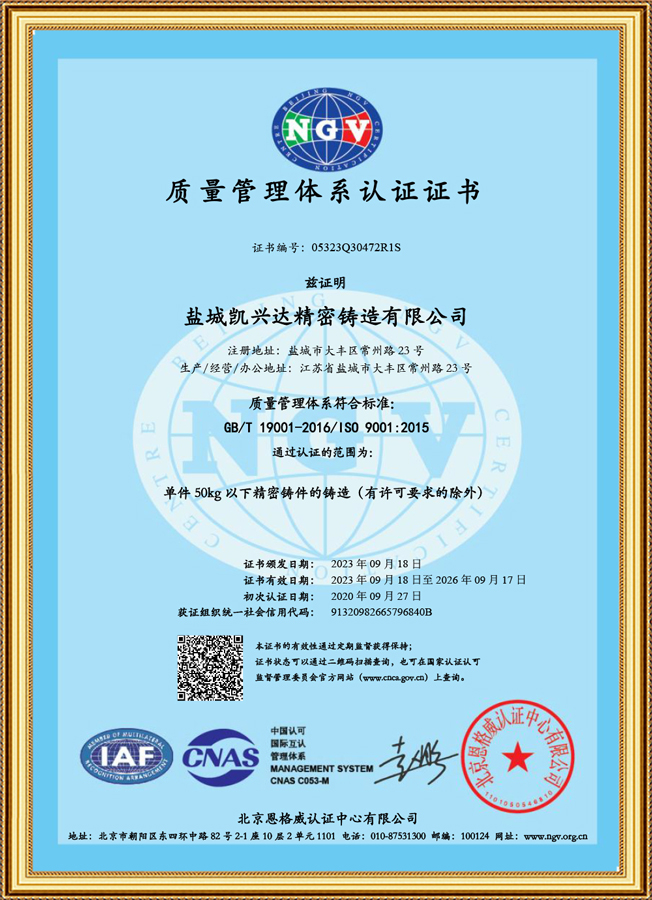
ISO 9001:2015
16-Q-0200122-TIC



In the past 20 years, we adhere to the concept of people oriented and commitment to integrity, strictly abide by the rules of safety in production, environment protection and occupational disease prevention, delicate to

 Español
 Pусский
 Deutsch
 Italiano


Comment
(0)